

 KO
KO CN
CN JP
JPThe 3-Week Golden Time That Shapes Your Recovery
Facial Paralysis
Scroll down
The 3-Week Golden Time That Shapes Your Recovery
Facial paralysis treatment
Facial paralysis treatment
Facial paralysis treatment
Facial paralysis treatment
Facial paralysis treatment
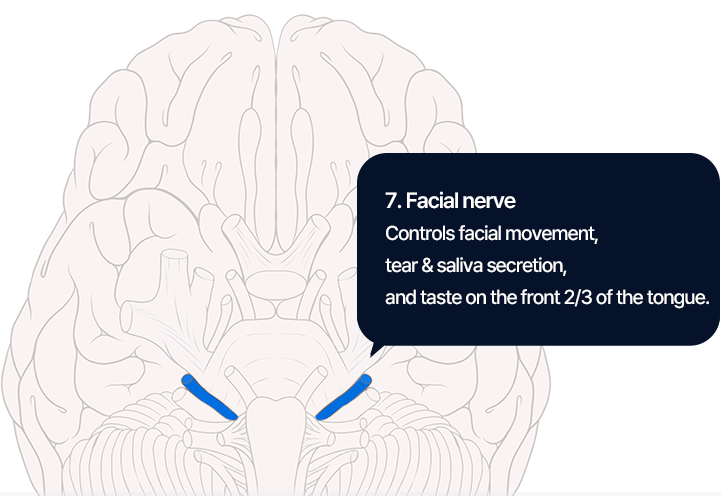
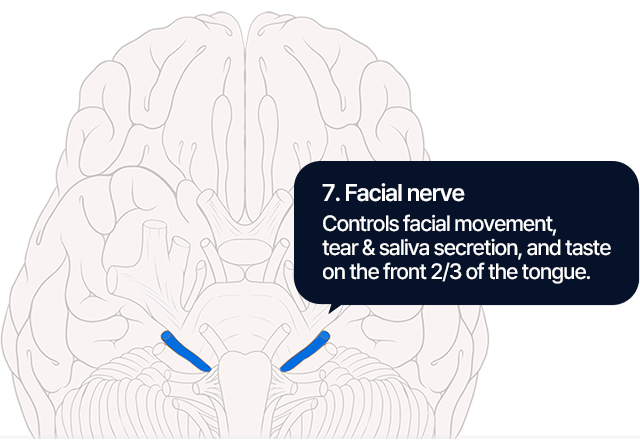
Facial Paralysis
The Standard in Facial Nerve Paralysis Treatment
Bareuljung Korean Medicine Hospital
Bell’s palsy is a nerve disorder that causes
sudden paralysis of facial muscles,
usually due to impaired function
of the 7th cranial nerve.
It often results in facial asymmetry
and weakness around the eyes or mouth,
and in severe cases, difficulty
eating or speaking.
Facial Paralysis
Accurate Diagnosis Matters
Key Symptoms by Affected Area
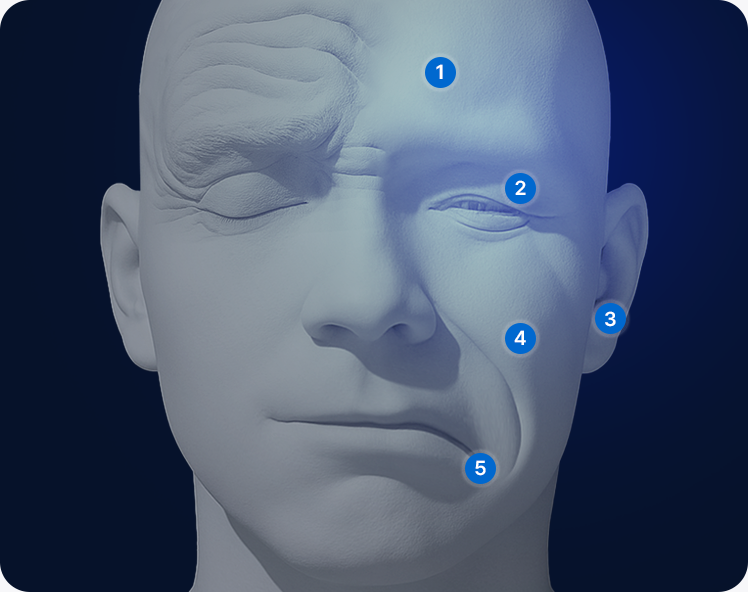
Bell’s palsy can result from viral infection, fatigue, stress, or lowered immunity.
In most cases, stress and immune weakness are the main triggers.
Two types - Peripheral & Central.
Accurate diagnosis defines the right treatment path.
Peripheral Type

Start treatment immediately
after onset.
Central Type

Accurate diagnosis first
facial paralysis treatment begins here.
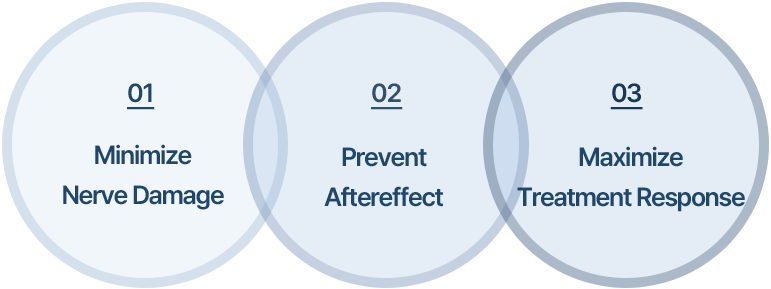
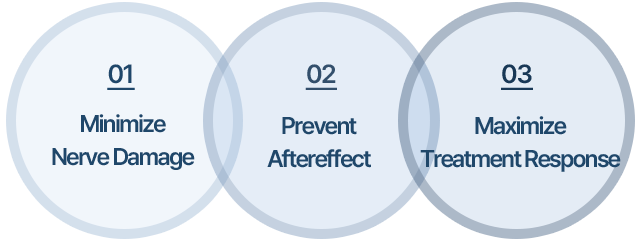
The Key to facial paralysis Treatment!
The 3-Week Golden Time!
The First 3 Weeks,
The Turning Point for Nerve Recovery
and Aftereffect Prevention
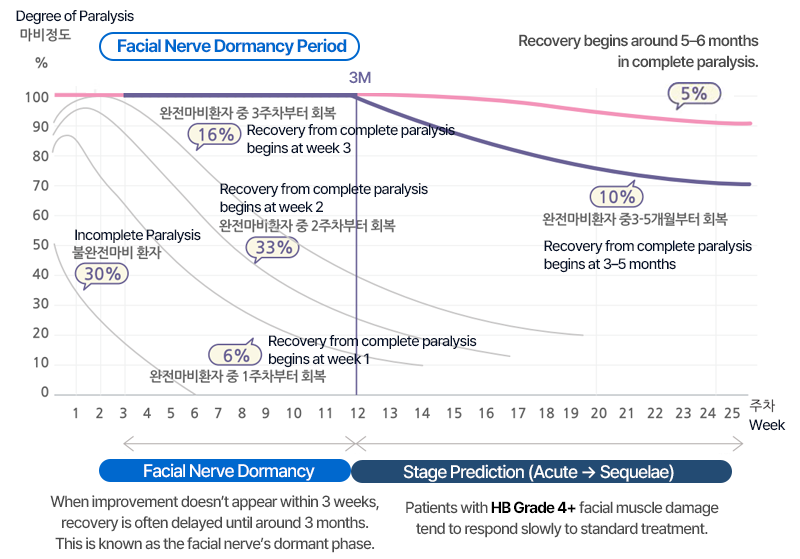
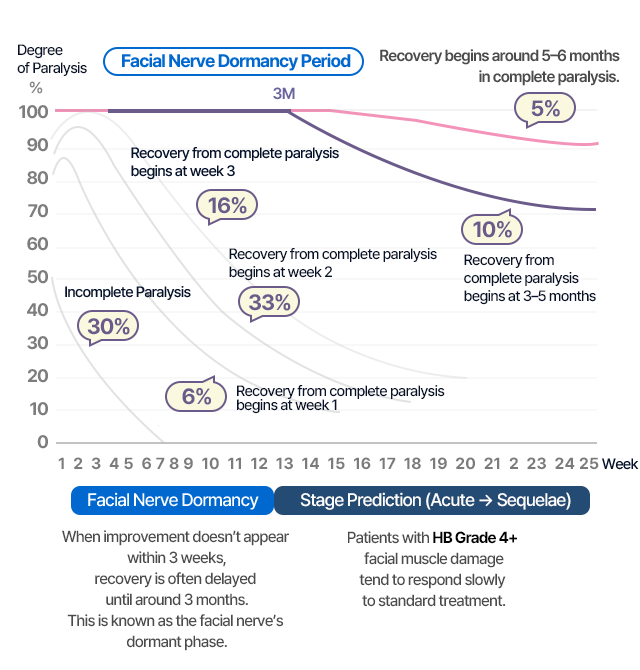
Patient Improvement Rate by Time Since Onset
Patients With vs. Without facial paralysis Treatmen
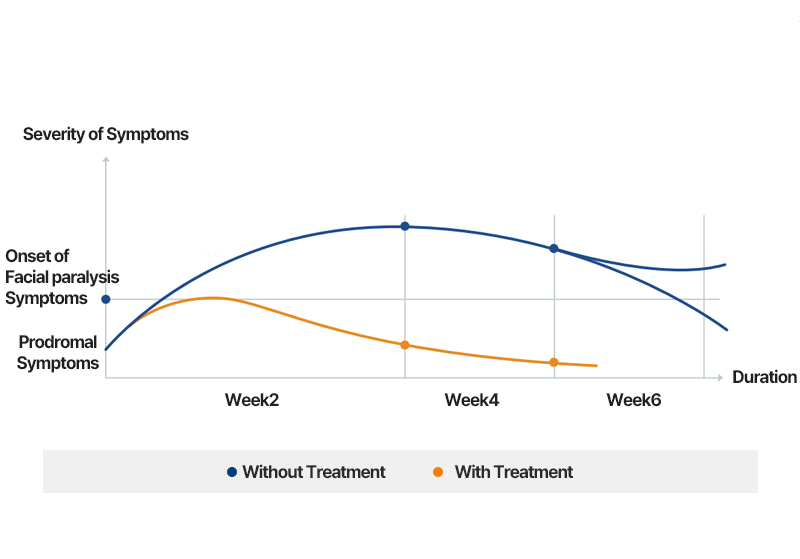
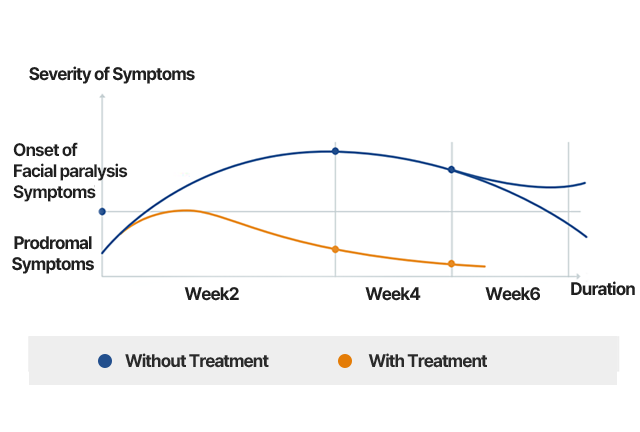
Once symptoms appear, intensive treatment should begin early,
focusing on muscle recovery and the prevention of aftereffects.
Early Treatment Window
0–3 Weeks Intensive care within 3 weeks
higher chance of recovery
Intensive care within 3 weeks
higher chance of recoveryFacial Nerve Dormant Phase
4–12 Weeks Recovery rate drops below 2% after 12 weeks
risk of sequelae increases sharplyRecurrence Risk Period
Within 10 Years Average recurrence rate: 10%
200× higher than normal
Facial nerve injury has five stages -
from mild weakness to complete paralysis.
A key guide for precise assessment
and personalized treatment.
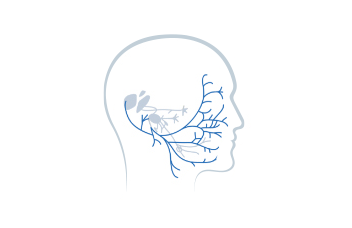
 Limited facial muscle movement Inability to open or close the eye Loss of forehead wrinkles Drooling while eating
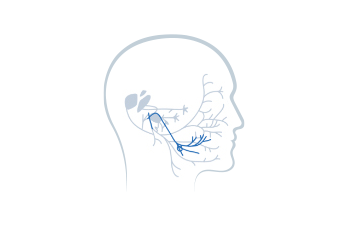 Coated sensation on the tongue Loss of taste on the affected side Imbalance in salivary secretion
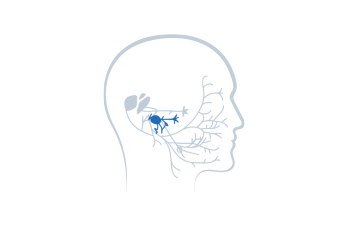 Hyperacusis Tinnitus with hearing loss Pain around or behind the ear
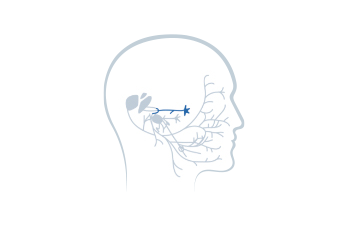 Decreased tear secretion Dizziness Balance disturbance
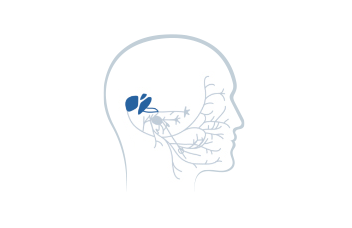 Similar to central-type symptoms
From Start to Finish of Facial Paralysis Treatment
Bareuljung KM Hospital
The severity of facial nerve damage determines the degree of symptoms,
and beginning proper treatment at an early stage is key to recovery.
Accurate assessment of nerve damage allows prognosis prediction
and guides individualized treatment planning.
Careful observation and understanding of each recovery stage
form the foundation of effective Facial Paralysis treatment.
Facial muscles are deeply connected to the facial nerve.
In Facial Paralysis, nerve injury causes
progressive muscle changes,
and understanding this process is key
to effective and personalized recovery.
| Damage Stage |
At Rest | During Movement |
|---|---|---|
| HB grade 1
(Normal) |
 Symmetrical
|
 Able to close
eyes normally |
| HB grade 2 |
Symmetrical
|
 Very mild asymmetry
visible only on close observation or by the patient’s own perception. |
| HB grade 3 |
Symmetrical
|
 Facial asymmetry
detectable upon professional evaluation. |
| HB grade 4 |
Symmetrical
|
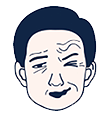 Facial asymmetry clearly
visible to the naked eye. |
| HB grade 5 |
 Asymmetrical
|
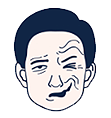 Subtle facial muscle response
|
| HB grade 6 |
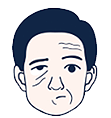 Asymmetrical
|
 No facial muscle response,
except eyelids. |
Facial muscle damage causes visible expression changes and daily discomfort.
Since it progresses by stages, early management is crucial for faster, fuller recovery.
Precise staging and tailored care
are essential to maximally preserve muscle function.
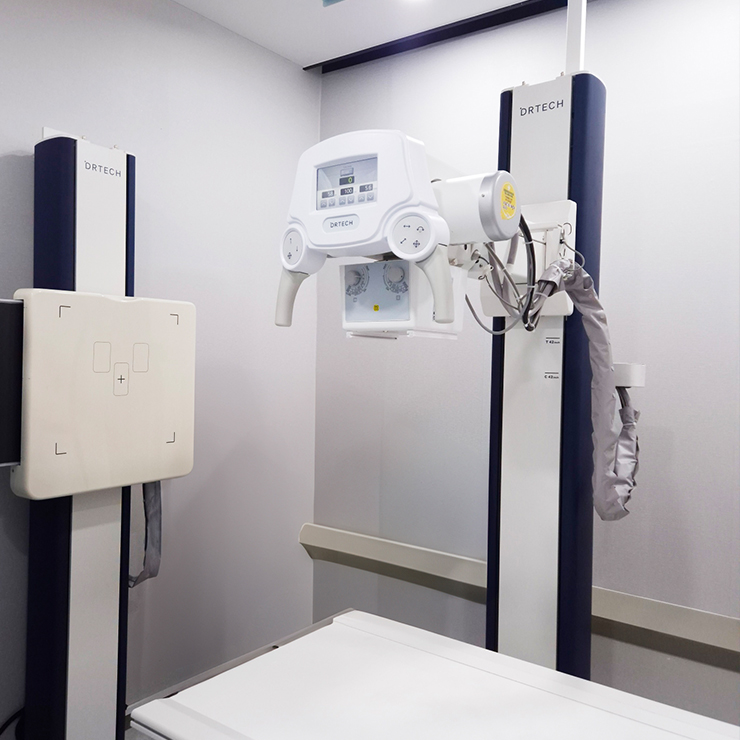
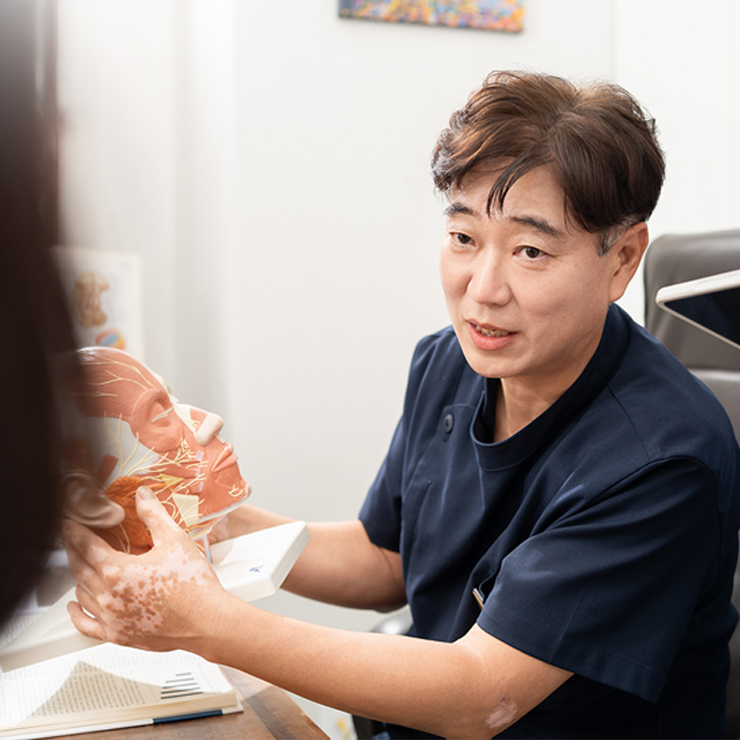
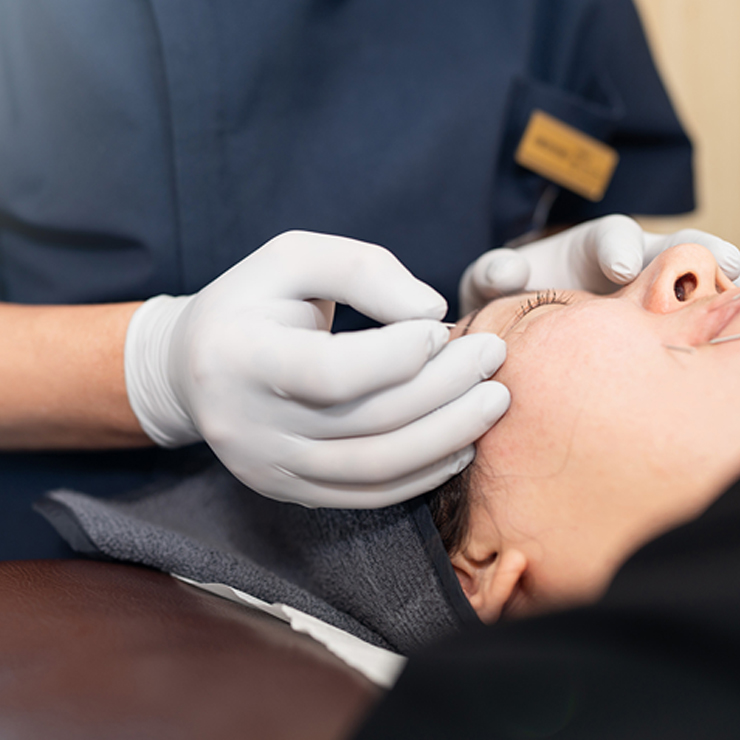
Bareuljung Facial Paralysis
Treatment Process Guide
Treatment
Process



It doesn’t recover on its own
early treatment determines the outcome.
Early diagnosis and treatment are crucial
to prevent further nerve and muscle damage.
Systematic, personalized care through
Korean–Western integrative medicine.
If symptoms appear, don’t wait
early professional care leads to recovery.
Tel.
+82-2-3281-1075
KakaoTalk
Work hour
Weekdays
AM 09:00 ~ PM 20:00
Lunch (Weekdays)
PM 13:00 ~ PM 14:00
Weekends · Holiday
AM 09:00 ~ PM 15:00
* We are open during lunch hours on
weekends and holidays.


닫기


 Insta
Insta
 Youtube
 Blog
Blog